The Duality Of Adhik Maas
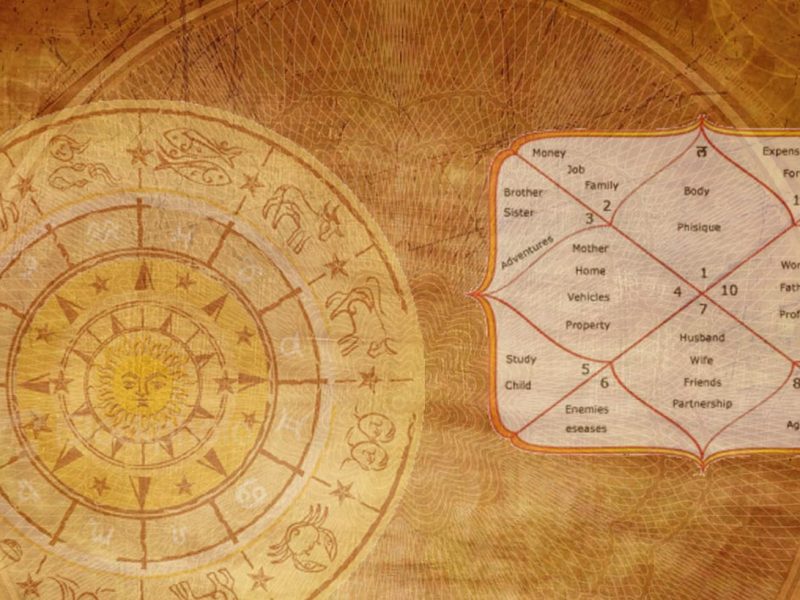
An adjustment between the Solar and Lunar calendars leads to an ‘additional’ ten days every year, which make one extra month every three years. On the other hand, Mythology bestows this extra month with a duality that makes it inauspicious and auspicious at the same time. The Global Bhatia brings you insights on this unique phenomenon called Adhik Maas – The Extra Month, which, in 2018, occured from 16th May to 13th June.
The Calculation
Time taken for Moon to complete one cycle around Earth = 29.53 days
Hence, one Moon Year = 29.53 days x 12 months = 354.3672 days
Time taken for Earth to complete one cycle around Sun = 365 days
Difference between one year of Earth and one year of Moon ~ 11 days
Hence, total difference in 3 years = 33 days = 1 (extra) month = Adhik Maas
_______________________________________
Born out of an anomaly, this 13th month is considered ‘impure’ and hence the name ‘Mal’ Maas. Another logic to the same name is that since these extra days are the difference between Solar and Lunar cycles, they are missing the ‘Tej’ or brightness or disinfecting qualities of the Sun – making them unclean. Any logic one may chose to go by, Adhik Maas is represented as impure.
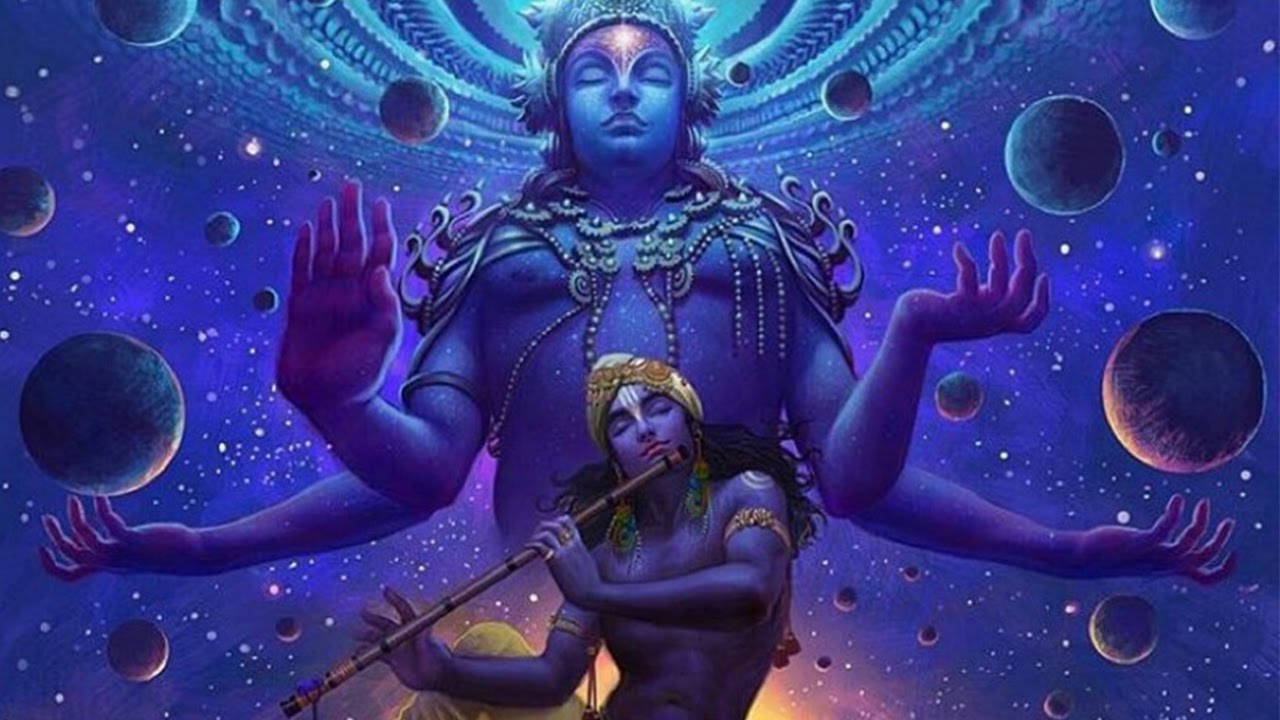
The mythological interpretation highlights the unique duality of this period. All 12 months of the Chandramana Varsha (Lunar Calendar) were assigned to a God. Without any God to belong to, Adhik Maas felt ill-treated and approached Lord Vishnu with his complaint.
The Lord understood the problem, consoled him and said that he was not Mal but rather ‘Adhik’. In His usual kind and benevolent nature, Lord Vishnu assigned Adhik Maas to himself and it would now be known as Purushottam Maas.
The Duality
Ironic as it may be, the same month is known as Mal Maas and as Purushottam Maas. Both these names have their bearing on how the month is observed. Being Mal Maas, it has a shadow of uncleanliness and is hence considered inauspicious for new beginnings like Janoi, Lagna (marriage), or Vastu (home). At the same time, since it is named after Purushottam Himself it also becomes an auspicious month albeit only for Gods and performing religious deeds. It has the unique privilege that no other month has – all Utsavs related to Gods can be celebrated in this month, irrespective of which month they are originally in. Sriman Narayan gave Adhik Maas the boon that any good deed like daan, dharma, puja, jaap etc. done in this month will get a result ten times more than normal. The Adhik Maas Vrat (fast) also helps in accumulating boons.
Hence, Adhik Maas has a unique duality of being inauspicious, yet auspicious at the same time.
Since the month does not come every year, annual festivals like the Diwali or Dussehra do not fall in this month. However, all the festivities of the lord that take place throughout the year are celebrated in this auspiciuous month.
According to the Purushottam Maas Katha, one may perform hindora (serving Laalan in jhula), naav manorath (serving the lord in a naav/ boat), take a dip in a holy river and later perform the traditional katha-gorma puja, chappan bhog (serving lord 56 samagris), paalna (celebrating childhood of the lord), Chunri Manorath, Giriraj Manorath (celebrating the Giriraj Leela), Raas Leela Manorath, Lagan Manorath, Phool Mandali and Annakut.
Many people observe an Adhik Maas Vrat during this time. People perform extra mala japas, pradakshinas, pilgrimages, scriptural reading and parayans.
People also perform rituals like recitation of the mantras, reading scriptures, performing various types of pujas and havans.
It is an auspicious time for re-installation of idol and also for doing Sanskars.
Fasting
Have a meal once a day to improve digestion and absorption of food. The upvas(fasting), ektanu (having meal only once a day), upvas for one day or ektanu help in doing so.
Charity
It may not be possible to give donations/offerings throughout the month. Donations can be given on ‘shukla’ and ‘krushna’ on tithi like Dwadashi, Pournima, Krushna, Ashtami, Navami, Chaturdashi, Amavasya and on ‘Vyatipat’ and ‘Vaidhruti’ yoga, is what is prescribed scientifically.
• Donate a lamp (Deep-daan). If a lamp is kept lighted all the time before god, it helps in financial gains.
• Donating money to brahmins in this auspicious month helps perform shuddhi(purification) of the rest of the money one has.
• Donating beetle-leaf throughout the month, helps change one’s fortune can for the better.
• Apush-daan (anarasas, a sweet) is also advised.
• Go on a pilgrimage to a revered site for dev-darshan.
• A holy-dip/Ganga-snaan may be taken in any river of a tirth place to ‘cleanse’ sins in Mal maas.
Precaution: Shubh prasang like marriage, engagement, deeksha, thread ceremony, maha-daan, apurva dev-darshan etc. should be avoided. All dharmik karya (religious works) can be performed in this month.
Necessary tasks like daily chores and those without which progress is halted, must continue to be carried out.
Rituals:
On the day Adhik Maas officially begins, one should wake up early in the morning. After bathing, one should offer water in a lota (pot) to Surya Narayana as the sun rises.
In the lota add a few grains of chokha (uncooked white rice), black till seeds, brown tillseeds, kumkum (sindhur) and flower-petals. Stand in front of the Sun and stretch your arms forward and block the Sun with the lota. Close your eyes and visualize that you are offering Him incense, lamp and flower petals. Now literally offer the water – still with your eyes closed on Suryadevas’ feet chanting “Om Sooryaaya Namah” as many times as you like. Now open your eyes. Pray to the Lord to remove any obstacles on your path.
On the concluding day, make donations and give to charity along with prayers for well being.
Traditional murti of Purushottam Bhagwan made from mud, along with 5 pinds of katha Gor Bhagwan. (courtesy: Dhruti Ashar)
Religion or Underlying Science?
We know how the Leap Year is used to adjust time and gives us an additional day once every four years. A similar phenomenon is observed in religious calendars of Christians, Jews, Buddhists, Sikhs and Parsis as they too have an adjustment or reference to a thirteenth month.
It is interesting to see how a scientific calculation based on planetary positions is so beautifully weaved into our socio-cultural fabric to align energies with the cosmos.
_______________________________________
Researched and presented by Simran Hitesh Sampat and Vishal Sampat, with guidance from Shri Arun Joshi and Shri Jignesh Joshi.
_______________________________________
Adhik Maas observed by Bhatias arond the world
The liberal emirate of Dubai has been home to Kutchi Bhatias for decades, with many families residing in the emirate for more than 60 years now. The Shreenathji Haveli located right behind the Jama Masjid in Bur Dubai stands evidence to communal harmony and reverence towards religion in the emirate.
This year, the month of Purshottam coincided with the holy month of fasting and reverence, Ramadan. The Adhik Maas (extra month) was one of celebration complete with kirtans, satsang and of course, meditation for Bhatia women who celebrated the month at the residence of Tarla and Ranjit Ved in Dubai.
Each day brought with itself a lesson, be it in the form of an Ektana fast performed by the ladies or volunteering to ferry one another to the Ved residence and back in the mornings bearing the summer heat. From song and dance in praise of the lord on Janmashtami to giving away Tulsi during Vivaah, each Manorath was observed with great reverence and splendor. Not to forget a dip in the sea, (for lack of a river in the region) which is believed to have powerful cleansing effects during the month. Humble daan were made by each person, proceedings of which went to a noble cause. And of course, no manorath is complete without prashad, which was made and distributed by ladies every day.
Adhik maas brought with itself learnings for many, the larger ones being one of patience, respect and living in harmony amongst one another.